
Why Sabine over-predicts a dead room, and what Eyring fixes
Sabine's equation assumes sound is absorbed continuously. In a heavily treated room it is not, and the prediction comes out a third long.
We design how buildings sound — concert halls, opera houses, studios, lecture rooms and places of worship — and we publish the measurement next to the prediction, including the times they disagree.
Field shoebox — solved live behind this page
Wallace Clement Sabine established the reverberation of a Harvard lecture room with an organ pipe, a stopwatch and several hundred repetitions, and found that the time a room takes to fall quiet is its volume divided by the absorption in it. Nineteen of us have been working from that fraction since 1979.
Wallace Clement Sabine spent three years measuring how long a note took to die away in a Harvard lecture room, and found the answer was the volume divided by the absorption in it. Every room brief since has been an argument about that fraction. Build one below.
The room
The surfaces

A 420-seat recital room eleven metres above a running tunnel. The acoustics were the easy half.
An open-plan floor held to a lecture room’s reverberation band, and a rooftop plant deck that had to lose 19 dB.
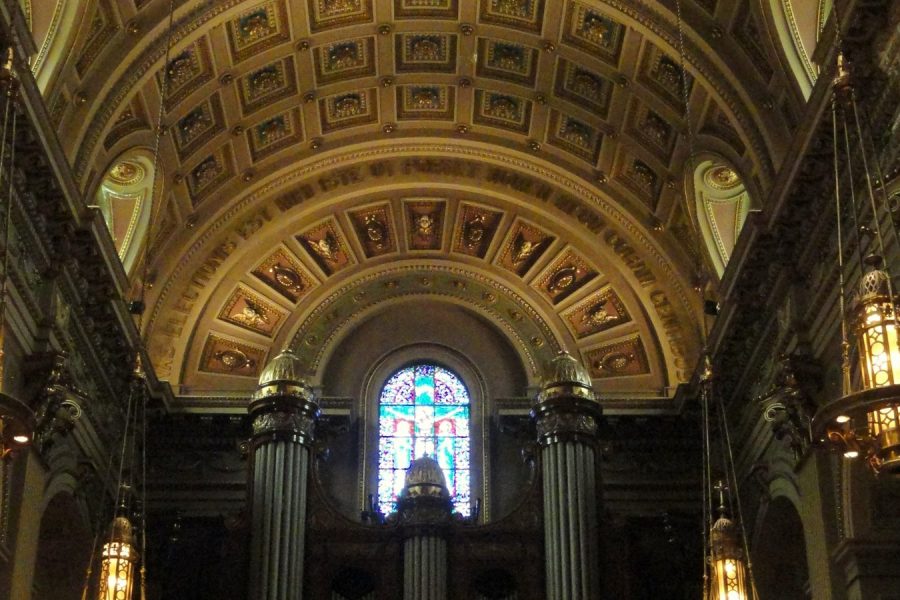
A stone nave brought from 4.2 s to 2.48 s without a single visible acoustic panel, and with a bass tail we kept on purpose.
290 seats, 1,058 m³ and 0.70 s — a raked teaching room designed so the back row hears consonants without a loudspeaker.
A 621 m³ live room where Sabine and Eyring part company by a fifth of a second — and Eyring is the one telling the truth.
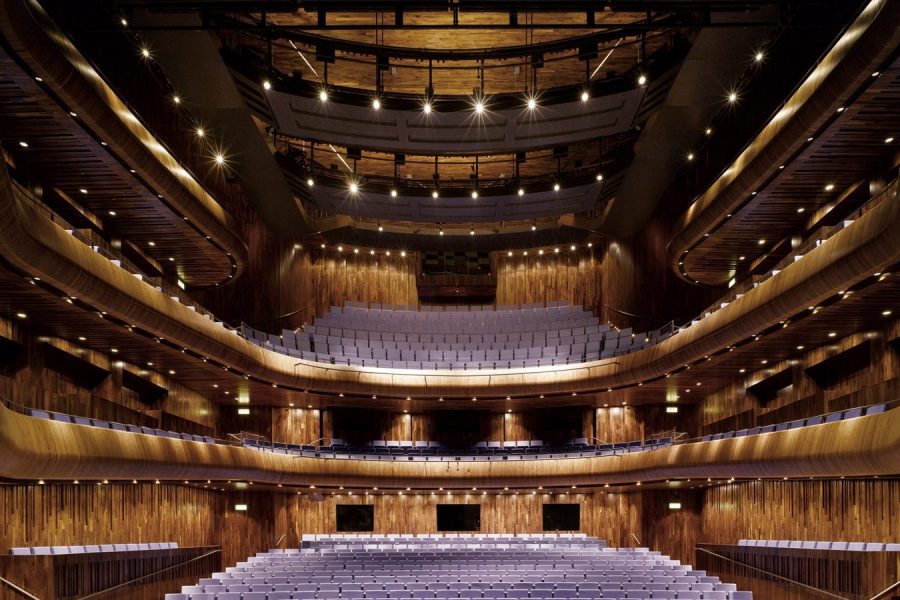
A 900-seat drama house inside a Victorian rope works. One second at mid frequencies, and a bass tail we argued about and lost.
Shape first, materials second. We would rather move a wall on a drawing than hang absorption on it afterwards, and we say so at the stage when moving it is still free.
Plant, traffic, neighbours, and the rehearsal room on the other side of the wall. Measured on site over a full week, because the worst hour is the one that decides the specification.
A railway under a concert hall is a structural problem before it is an acoustic one. Isolation bearings are designed with the engineer, not specified at them.
Where the room cannot do it alone. We design the system to finish the room's argument rather than to shout over it, and we tune it in the finished space.
We compute every room twice — Sabine and Eyring — and publish the gap. In a live room the two agree and the gap says nothing. In a treated one they part company, and the size of that divergence is the honest measure of how far the statistical assumption has been stretched to reach the answer.
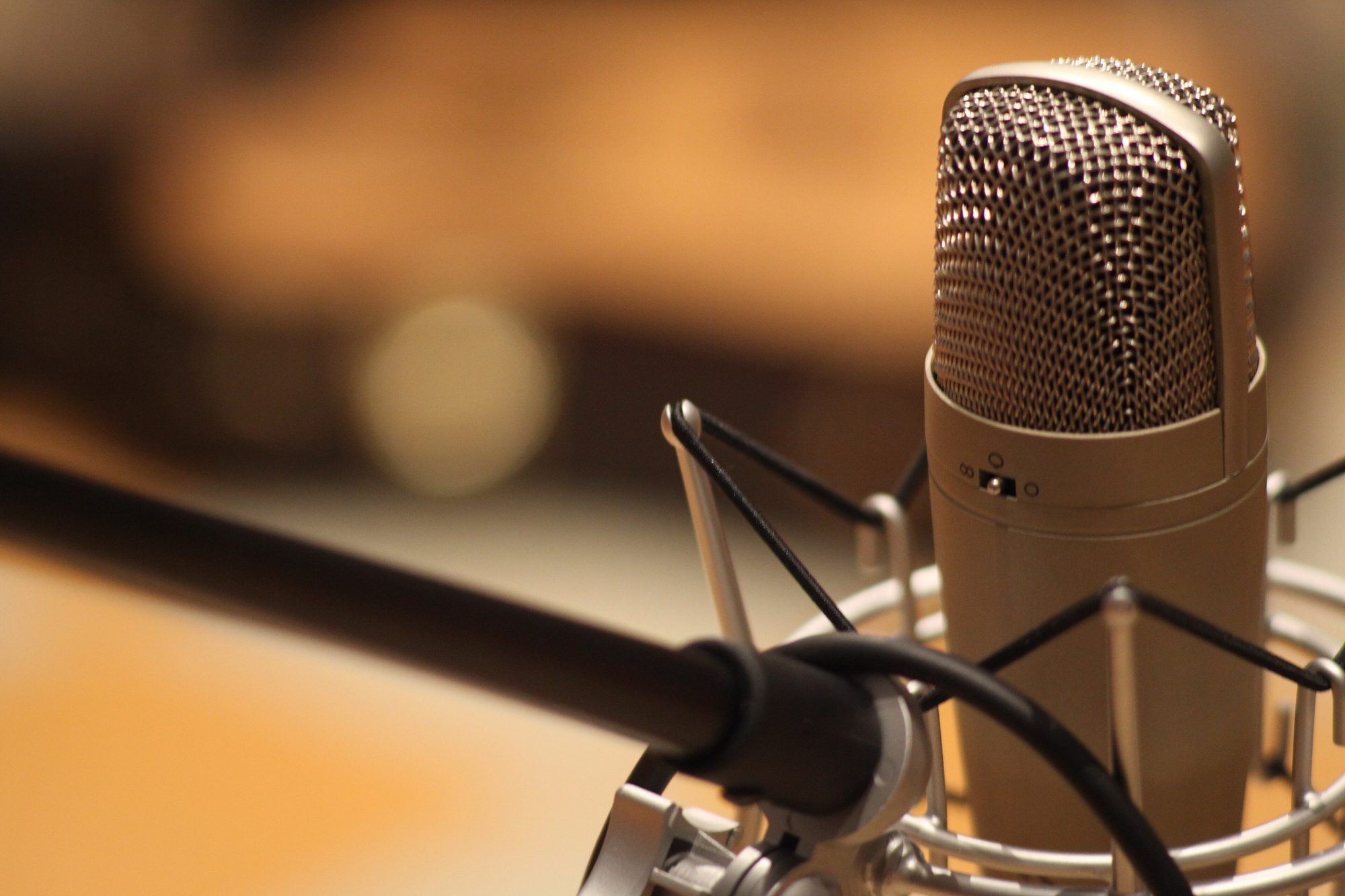
Sabine's equation assumes sound is absorbed continuously. In a heavily treated room it is not, and the prediction comes out a third long.
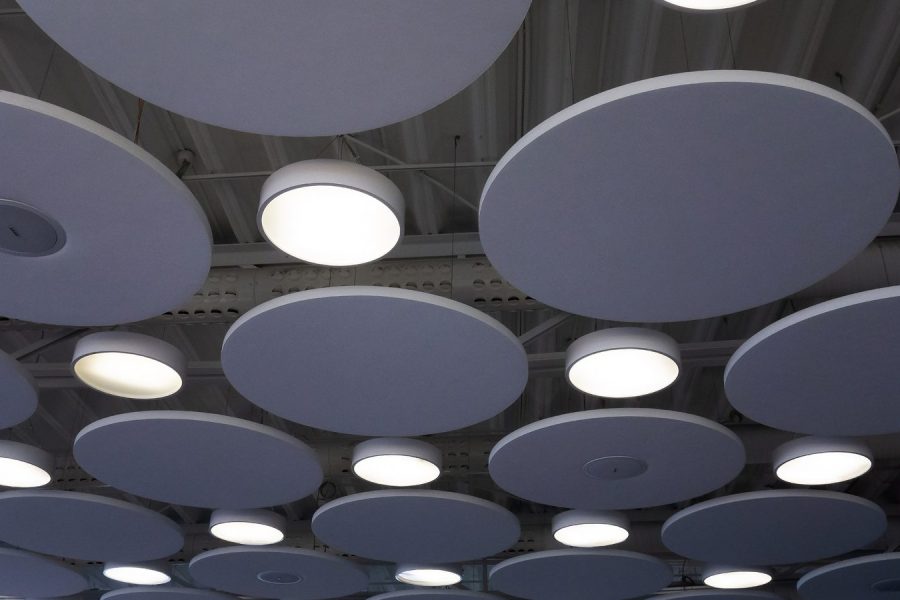
The wells are not decoration and the sequence is not arbitrary. It is a number-theoretic trick for making a wall scatter evenly.

A small room does not have a reverberation time in the bass. It has a handful of resonances, and where they fall was decided when the walls were drawn.
A drawing, a volume, or a recording of the problem. Any of the three is enough to start, and the first conversation is not charged for.