Why Sabine over-predicts a dead room, and what Eyring fixes
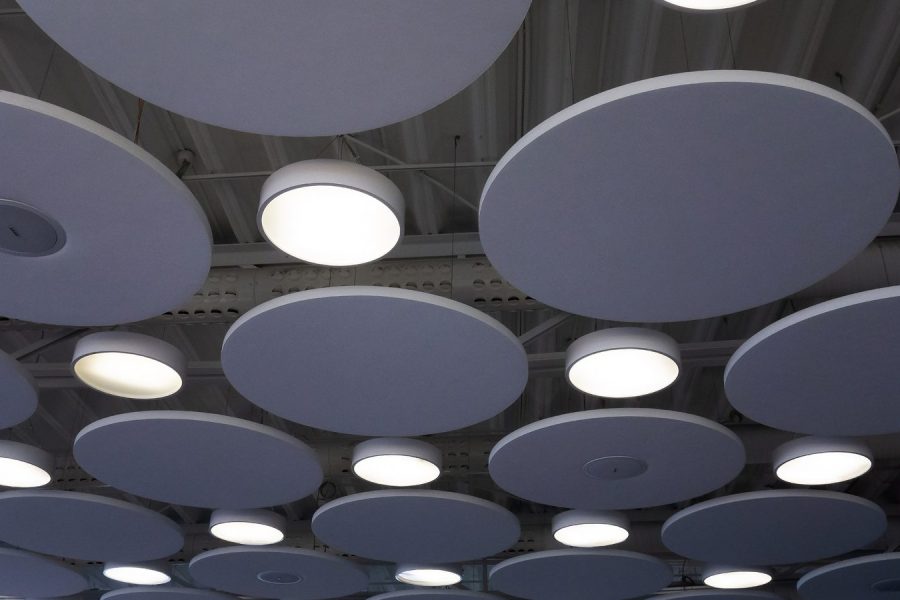
Sabine's equation assumes sound is absorbed continuously. In a heavily treated room it is not, and the prediction comes out a third long.
Sabine's equation assumes sound is absorbed continuously. In a heavily treated room it is not, and the prediction comes out a third long.
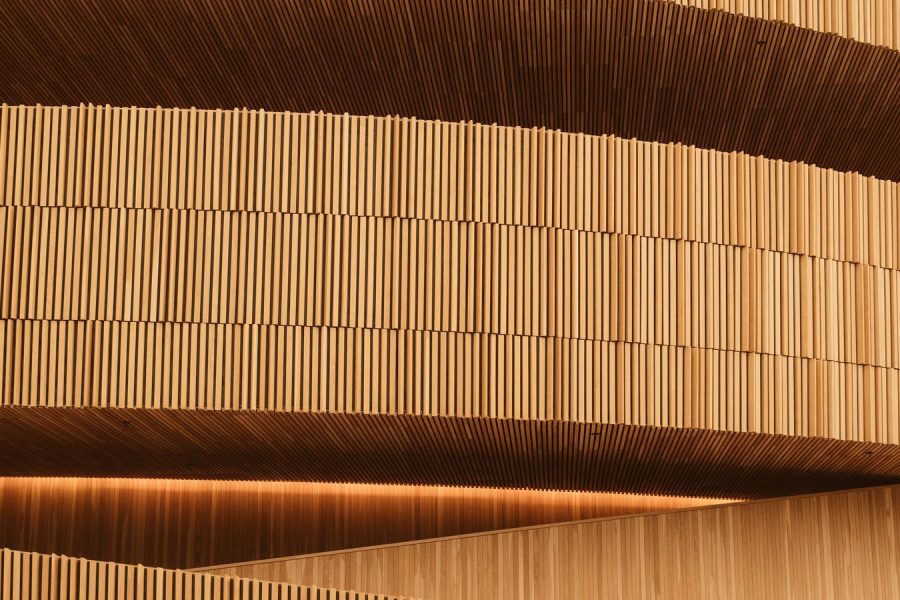
The wells are not decoration and the sequence is not arbitrary. It is a number-theoretic trick for making a wall scatter evenly.
A small room does not have a reverberation time in the bass. It has a handful of resonances, and where they fall was decided when the walls were drawn.
An empty auditorium and an occupied one are different rooms. Everything hangs on how large the difference was allowed to be.
The single most common misunderstanding we are asked to correct — and the reason foam on a party wall has never once worked.